
Disaster Recovery: Different Strategies for Different Needs
Think of disaster recovery (DR) as your organization's backup plan; it's how you get your tech and operations back up and running after something nasty happens, like a natural disaster, cyber attack, or when equipment decides to call it quits. The main goal? Keep downtime to a minimum and save your data. It's part of a bigger picture called business continuity planning (BDR).
DR fits right into what's called the Well-Architected Framework, it's like a recipe book for building solid tech systems. This framework helps organizations set up their tech infrastructure in a way that's tough, fast, secure, and efficient. When it comes to keeping things reliable, DR plays a huge role. The framework tells us that reliability means your workload needs to spot problems and keep things available. Your systems need to bounce back from issues and fix themselves automatically.
Now, not everyone needs a super fancy automated DR setup. It's kind of like buying a sports car when a regular car would do just fine. It really depends on what your organization needs.
As Wikipedia puts it in plain terms, Disaster Recovery is all about "the process of maintaining or reestablishing vital infrastructure and systems following a natural or human-induced disaster, such as a storm or battle".
In this article, we're going to break down DR from different angles. How it works with AWS best practices, what your business needs might be, and how Betta can help you put together a solid DR plan that works for you.
🏗️ Implementing Disaster Recovery
DR is basically your organization's safety net that keeps critical systems running when things go wrong. Think of it as a backup plan that helps keep your business up and running, making sure you can still serve your customers even when unexpected problems pop up. Having a solid disaster recovery plan helps you check all those important compliance boxes, especially if you need to follow rules like the NIST-CSF framework.
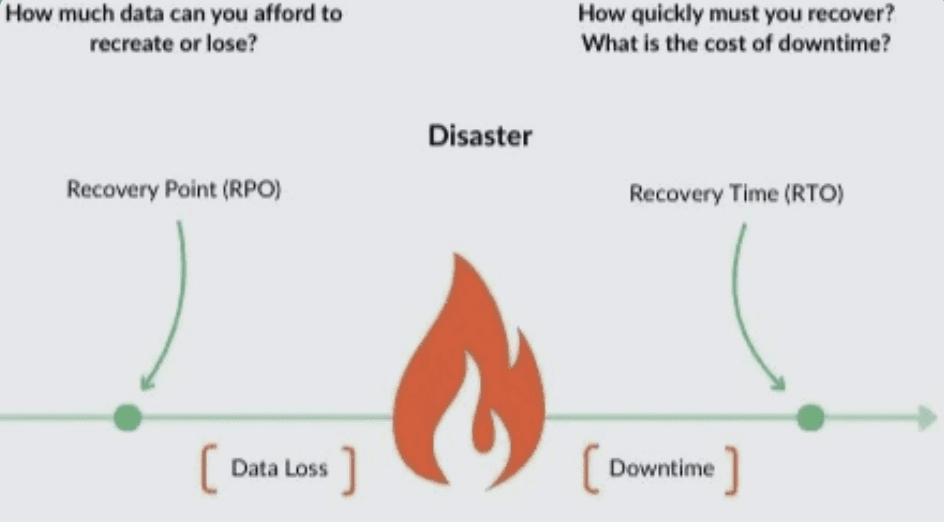
When planning for disaster recovery, there are two super important things to keep in mind: Recovery Time Objective (RTO) and Recovery Point Objective (RPO). These are like your north stars for building a good strategy.
RTO is how long you can afford to be down before getting back online
RPO tells you how much data you're okay with potentially losing if something goes wrong - basically, how far back your last good backup needs to be.
If you're in healthcare or finance industries, where every transaction can affect people's lives and their money, you really need a solid DR strategy to keep things running smoothly and avoid any big disruptions.
AWS has got your back with all sorts of recovery options that fit different needs. Whether you need a basic backup that takes a few hours to get running, or something super-quick that kicks in right away, they've got you covered.
📚 Disaster Recovery vs High Availability
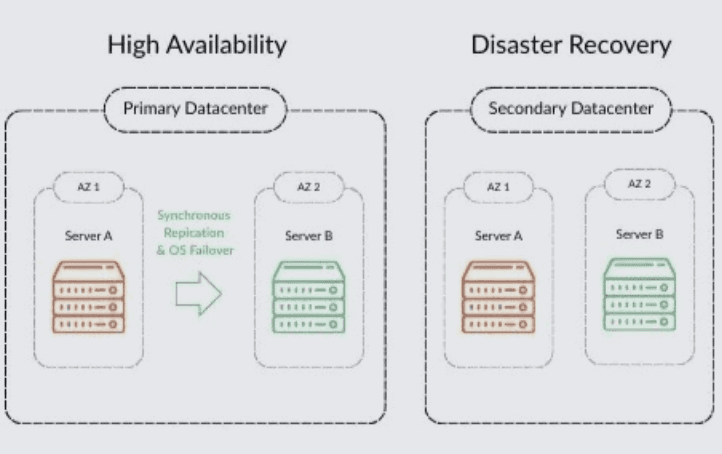
Both HA and DR use similar tools like watching for failures, setting up in different places, and switching between systems. The main difference is that HA deals with single parts breaking down, while DR handles bigger problems that affect your whole system or large chunks of it.
DR needs its own approach, separate from HA. While HA keeps individual components running, DR focuses on having complete backup systems in different locations that can take over if needed.
Let me give you a real-world example: if an application runs on a single computer in one datacenter, it lacks high availability because a single component failure could cause downtime. In contrast, if the entire data center becomes unusable due to flooding, DR protocols would enable shifting operations to a backup location to maintain business continuity.
🎯 Four Strategies for DR
When implementing DR in AWS, you can choose from four approaches. Each offers progressively better recovery times (RTO) and lower data loss potential (RPO).
Backup and Restore
Backup and restore is the basic disaster recovery option in AWS. It works by creating regular backups of your data and applications using services like Amazon S3. This method works well for businesses that need to minimize costs but still want reliable data recovery.
It's the most affordable DR option since you only need to pay for storage and minimal infrastructure costs until an actual disaster happens.
The main drawback is slower recovery times (RTO). Your system will take longer to get back online compared to other methods, which may not work for critical applications where quick recovery is essential.
Pilot Light
Pilot light keeps your system's essential components continuously running in AWS, while non-essential components remain inactive until needed. This approach costs less than a full multi-site setup while enabling quick system restoration.
This strategy effectively balances costs and recovery speed. Since core components stay active, you can restore operations faster than with basic backup methods. Keep in mind that this approach requires thorough planning and consistent testing to verify rapid system restoration capabilities.
Warm Standby
Warm standby maintains a minimized version of your production environment. This environment runs continuously but at reduced capacity. When a disaster occurs, it can rapidly expand to handle full production workloads. This approach strikes an optimal balance between cost-effectiveness and recovery speed when compared to multi-site solutions.
This strategy delivers quick recovery without the expense of full redundancy. Organizations reduce costs while maintaining readiness for rapid expansion. Regular testing and monitoring are essential to verify the system can scale up effectively when needed.
Multi-Site
Multi-Site (hot standby) keeps an exact copy of your system running at all times in AWS. Your backup system stays fully active and can take over right away if something goes wrong with the main system. Both systems run at the same time to prevent any interruptions in service.
The main benefit is speed; your systems can switch over almost instantly, with minimal data loss. This works best for critical systems that absolutely cannot go down. The trade-off is clear: running two complete systems costs roughly twice as much, which many organizations cannot afford.
Disaster Recovery Strategy with Betta
Our Disaster Recovery Strategy program is a focused 2-week program where we examine your technical needs for DR. We look at key requirements like where your systems need to run, how quickly they need to recover, and what regulations you need to follow. We'll help set up tools to make your systems easy to rebuild anywhere, and find ways to save money while meeting your DR goals.
We make DR planning practical and focused on results. Our team works with you to meet your specific compliance needs and ensure smooth operations. We run real-world tests to show you exactly how your systems will handle outages. This helps you build stronger systems and be ready for any disruptions.
By following AWS best practices and drawing on our extensive experience, we'll help make sure your systems stay reliable when problems happen. This means your customers will continue getting the service they expect, even during difficult times.
" width="205px"/></svg>)


